
Batavia's 2027 budget would raise water and sewer rates 8% and electric 3.5%
The increases would add about $13.21 to a typical monthly bill. The public hearing is Tuesday at 7 p.m., with a final vote expected Dec. 7.
Key takeaways
- Water and sewer rates would rise 8% and electric rates 3.5% on Jan. 1, about $13.21 more a month at typical usage.
- The city's property tax rate would go from 0.86 to 0.96 per $100 of assessed value, about $10 a month on a $400,000 home by the city's estimate.
- Staff want direction on lowering most residential speed limits from 30 mph to 25 mph.
- The committee will discuss, but has not decided, whether to close Wagner Road at the Aurora line if Aurora's gate stays shut.
Batavia residents get their say Tuesday night on a proposed $173.36 million city budget for 2027 that would raise water and sewer rates 8% and electric rates 3.5% starting Jan. 1.
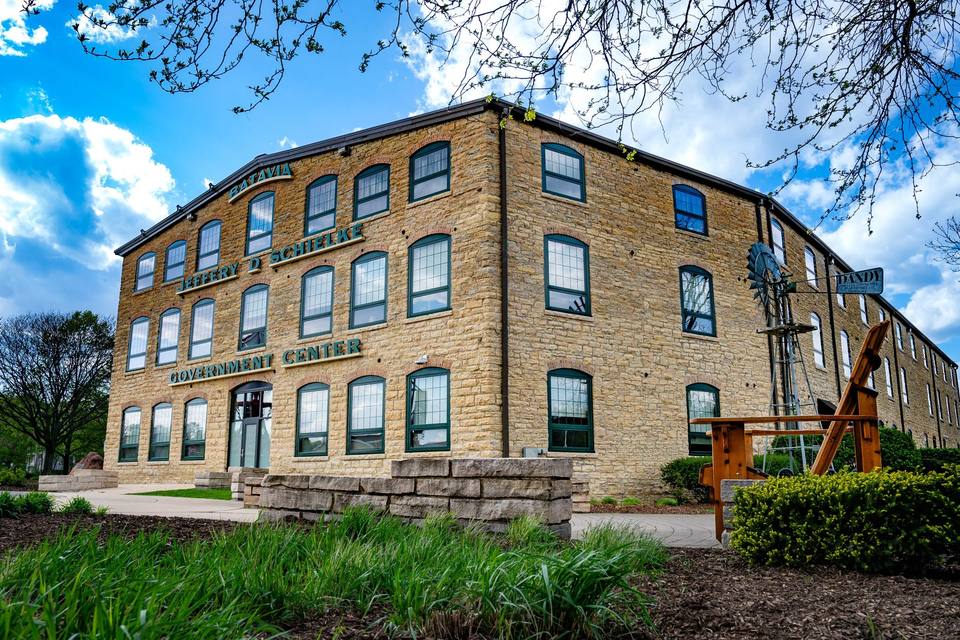
At the usage the city uses for its comparisons (1,000 kilowatt-hours of electricity and 900 cubic feet of water a month), the three increases add $13.21 to a monthly bill, according to the budget presentation in the meeting packet. The City Council's Committee of the Whole holds the public hearing at 7 p.m. at City Hall, 100 N. Island Ave. The city expects a final vote on the budget and rate ordinances Dec. 7.
A typical bill rises $13.21 a month
The city's figures for a typical month:
- Electric: up 3.5%, or $3.75 at 1,000 kilowatt-hours
- Water: up 8%, or $3.61 at 900 cubic feet
- Sewer: up 8%, or $5.85 at 900 cubic feet
The capital fee the city added to water and sewer bills in 2026, $3.75 a month for homes and $7.50 for businesses, stays in place.
Public Works Director Andrea Podraza's memos say the increases pay for capital projects and day-to-day operating costs. The budget presentation says nearly all of the new money goes to capital improvements, not purchased power costs. The electric increase comes before a rate study by The Brattle Group is finished. That study won't be done until the middle of 2027, and "staff felt that this could not wait," the electric memo says. The city plans more public meetings on the electric rate structure next spring and summer.
The memos list one drawback: "No one likes an increase but without them the funding mechanisms would not be in place to keep our critical infrastructure operating in peak performance."
With the increases included, the city's own comparison at the same usage puts a Batavia household at $281.44 a month for electric, water and sewer combined. The same chart puts Geneva at $259.09, Naperville at $290.62 and St. Charles at $377.75. The city says its electric charge would run about $19.50 a month less than ComEd's.
Property tax rate goes up a second dime
The city's property tax rate would rise from 0.86 to 0.96 per $100 of equalized assessed value. The presentation calls it the second of two planned 10-cent increases. For a home valued at $400,000, the city estimates the change at about $10 a month, or $120 a year, in the city's part of the tax bill.
The city says the new rate is still below the 1.05 average of 23 suburbs it compared; the same chart lists Geneva at 0.46 and St. Charles at 0.69. The city receives 12 cents of each property tax dollar a Batavia homeowner pays. Batavia Public School District 101 gets 64 cents.
Staff project the General Fund will balance, except for extra road spending that would come out of reserves for one year. The presentation says a long-term way to pay for roads and bike and pedestrian plans is still to be decided in 2027.
Tuesday's hearing covers the budget. The city has scheduled a separate public hearing on the property tax levy for Nov. 17.
25 mph on residential streets?
Also on Tuesday's agenda: whether to lower the speed limit on most residential streets from 30 mph to 25 mph. No vote is planned. Police Chief Eric Blowers' memo asks aldermen for direction.
A new state law, Public Act 104-0787, lets cities lower speed limits in residential districts, and the city attorney's opinion says Batavia can do it without street-by-street traffic studies. Staff's early approach would cover local residential streets and possibly some minor collectors. Busier roads and industrial streets would keep their current limits.
Engineering studies in 2024 recommended 25 mph on only five residential streets (Hunt Lane, Haines Drive, Elm Street, Chillem Drive and Morton Street) plus Woodland Hills Road. In 2024, staff counted more than 300 speed limit signs that might need replacing at about $200 each, plus several hundred new sign locations at about $300 each. The memo also notes that a lower posted limit may not slow drivers without enforcement or traffic calming. Geneva already posts 25 mph on most of its residential streets.
A separate ordinance on the agenda would extend the 20 mph limit to more downtown streets, following the limit the council set on parts of First and Water streets in September. Our earlier story covers the downtown speed limit and storm sewer work.
Wagner Road gate: closure discussed, not decided
Aldermen also return to a dispute with Aurora over a gate on Wagner Road at Mesa Lane, just north of Walmart in Aurora. The gate blocks the road from the south, so traffic in and out of Aurora's Kirkland Farms subdivision uses Batavia's stretch of Wagner Road and Wind Energy Pass. Batavia counted 1,094 vehicles a day there in September.
Nothing has been decided, and Tuesday's item is listed for discussion. A Nov. 2 memo from Community and Economic Development Director Scott Buening says the committee talked on Sept. 29 about closing Wagner Road at the city line starting Dec. 1 if the gate is not opened or the dispute is not substantially settled by then. Aurora Mayor John Laesch and several Aurora residents spoke at that meeting for keeping the gate closed or for more time, the memo says. "To date we have no new information or communication from the City of Aurora," it says. Staff are asking the committee what to do next.
The packet has no current statement from Aurora. The only Aurora letter in it is dated Aug. 3, 2023. In it, then-Mayor Richard Irvin wrote that the gate keeps shoppers and others from cutting through the neighborhoods, and he offered to pay a significant part of the cost of maintaining Batavia's stretch of Wagner Road instead of opening it. Batavia's letters argue the subdivision has effectively one way in and out, which slows emergency response and puts the traffic on Batavia streets.
The committee will also talk about fire chief succession planning. The packet has no memo on that item.
Comment at the meeting or online
Speak at the hearing Tuesday, or send questions through the form on the city's budget page. BATV streams the meeting on YouTube. The city anticipates a final vote on the budget and tax levy Dec. 7.
Utility bills will also soon carry a $9 monthly telehealth charge unless customers opt out. Our telehealth fee story explains how.
What you need to know
- Public hearing: Tuesday, Nov. 10, 7 p.m., City Hall, 100 N. Island Ave.
- Watch live: BATV on YouTube
- Send questions: bataviail.gov/FY27
- Tax levy hearing: Tuesday, Nov. 17, at the Committee of the Whole meeting
- Final vote: City Council, Dec. 7
Sources
- City of Batavia: Committee of the Whole agenda, Nov. 10, 2026
- City of Batavia: Committee of the Whole agenda packet, Nov. 10, 2026 (budget slides, rate memos and ordinances, speed limit memo, Wagner Road memo and letters)
- City of Batavia: FY 2027 proposed budget page and timeline
- City of Batavia news release, Oct. 30, 2026: Batavia's proposed 2027 budget
- City of Aurora: Mayor John Laesch
See more of our local reporting in your Google results.
Add Word Round Town as a preferred source on GoogleRelated stories

Know what's happening around town.
Get local news, events, deals and community discoveries in your inbox.